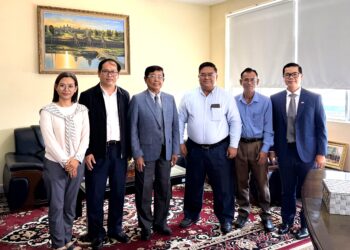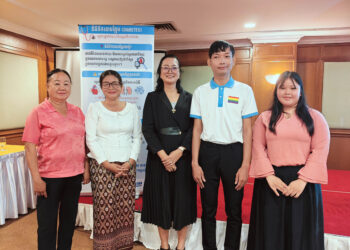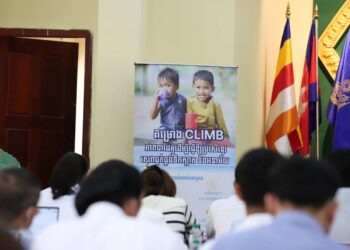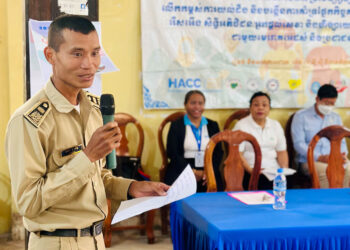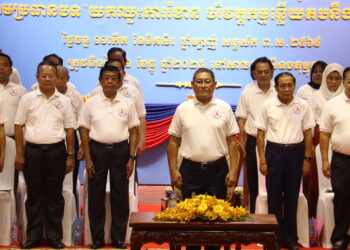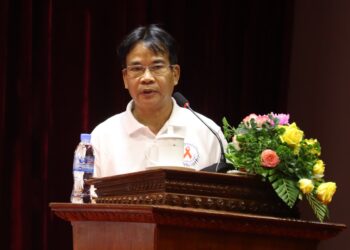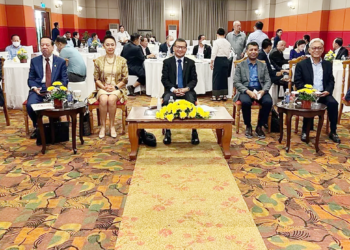
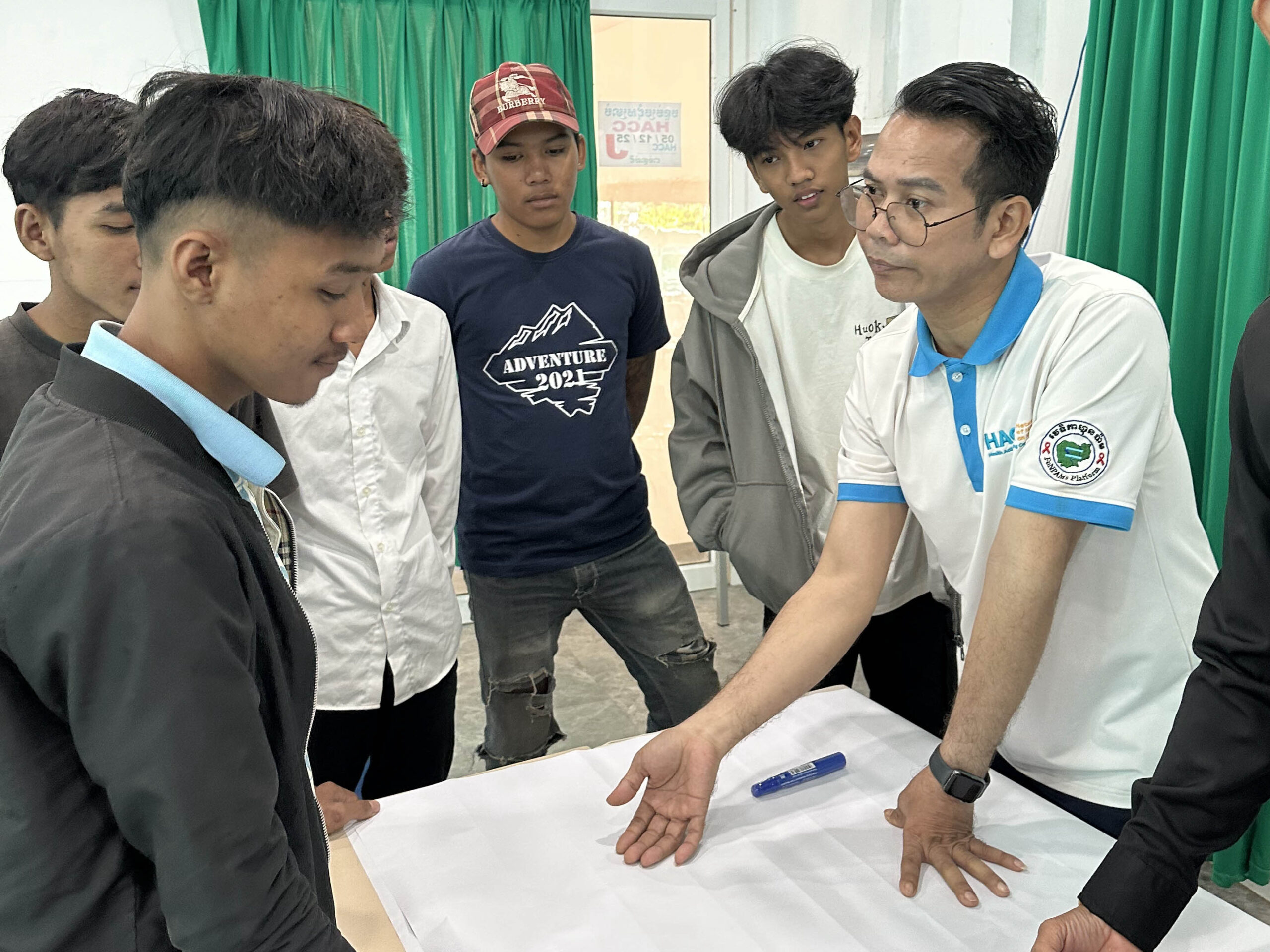
The Health Action Coordination Committee (HACC) successfully organized Community-Led Monitoring (CLM) Community Forums to discuss and promote the implementation of CLM mechanisms in AIDS programs and related services in four provinces—Kampot, Koh Kong, Svay Rieng, and Kampong Cham—from 1–5 December 2025, with a total of 308 participants.
These community forums aimed to share the results of CLM implementation and to increase awareness of CLM mechanisms, contributing to the improvement of AIDS program interventions and related services for communities, including people living with HIV (PLHIV) and key populations.
Community-Led Monitoring (CLM) is implemented by PLHIV and key population community representatives (FoNPAM) using online data collection tools and dashboards to gather real-time feedback from community members. The CLM system currently monitors six key areas: HIV prevention and testing, care and treatment, human rights and gender-based violence, social protection, stigma and discrimination, and mental health. CLM data is collected across 12 target provinces under the Global Fund–supported Community System Strengthening (CSS) project led by HACC.
Dr. Ngov Bora (NCHADS) and H.E. Tia Phalla (NAA), praised CLM as a powerful tool that amplifies community voices, identifies service gaps, and strengthens multi-sector collaboration.
HACC Executive Director Mr. Tim Vora highlighted that CLM has shifted from traditional paper-based reporting to an online feedback system, enabling communities to speak up more confidently and safely.
The forums concluded with a strong call from national stakeholders to hold CLM forums every six months to ensure timely interventions and continuous improvement of HIV services.
The forums brought together a wide range of stakeholders—from national authorities to sub-national departments, NGO partners, frontline health service providers, and community representatives. Participants included representatives from the National AIDS Authority (NAA), NCHADS, provincial AIDS programs, provincial departments (Planning, Social Affairs, Education, Labour, Tourism, Women’s Affairs), police, Red Cross, commune AIDS committees, ART clinics, NGO partners, and key population networks.