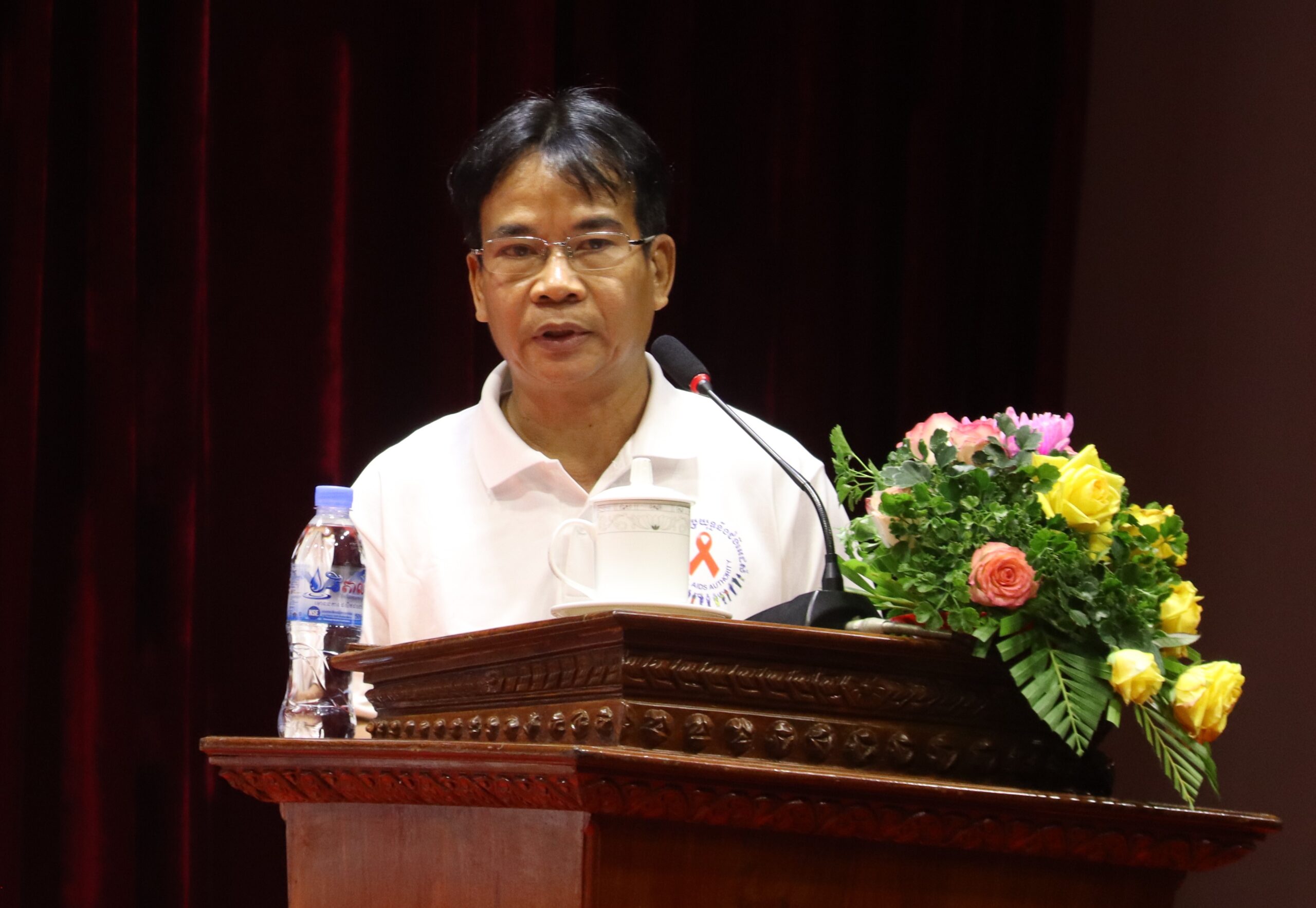
Welcoming Remarks of the Representative of Civil Society Organizations
Delivered by Dr. Khem Thann
Member of the Steering Committee, Health Action Coordination Committee (HACC)
Representative of Civil Society Organizations Implementing HIV/AIDS Response Programs
World AIDS Day – 1 December 2025, Cambodia
Theme: “Overcoming disruption, transforming the AIDS response”
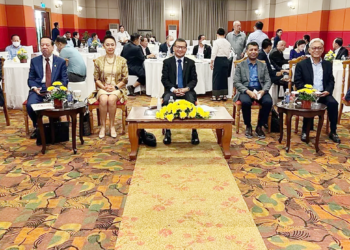
Chaktomuk Conference Hall, Phnom Penh
Your Venerable Monks, with deepest respect,
Excellencies, Distinguished Guests, Ladies and Gentlemen,
With highest respect,
His Excellency Mr. Sok Chenda Sophea, Deputy Prime Minister, Highest Presentative of Samdech Moha Bovorthipadei Hun Manet, Prime Minister of the Kingdom of Cambodia, and Her Excellency Dr. Pich Chanmony Hun Manet.
With respect,
His Excellency Ieng Mouly, Senior Minister and Chairman of the National AIDS Authority;
Ms. Patricia Ongpin, UNAIDS Country Director for Cambodia, Laos and Malaysia;
Ms. Han Sieng Horn, Representative of People Living With HIV in Cambodia;
Excellencies, Ladies and Gentlemen representing relevant Ministries and Institutions;
Excellencies, Ambassadors, development partners, national and international organizations;
Beloved brothers and sisters from communities living with and affected by HIV/AIDS.
On behalf of civil society organizations that have been implementing health promotion programs—especially the HIV/AIDS response in Cambodia—I am deeply honored and delighted to participate and deliver welcoming remarks on this World AIDS Day, 1 December 2025. Like many countries across the globe, Cambodia is commemorating this day under the theme “Overcoming disruption, transforming the AIDS response.”
World AIDS Day is organized to recognize the participation and support for people living with and affected by HIV/AIDS, and to highlight the collective efforts—including multisectoral engagement—to prevent, control, and eliminate the spread of HIV/AIDS in order to achieve the global goals set for 2030.
On behalf of the Health Action Coordination Committee (HACC), the communities living with HIV, and key populations (KPs), I would like to express my deepest gratitude to the National AIDS Authority for leading and organizing World AIDS Day every year. This annual commemoration aims to remind the public that HIV/AIDS remains an infectious disease and continues to pose a threat to public health. We cannot afford to forget HIV/AIDS under any circumstances, especially as we work with the global community to overcome emerging challenges, including disruptions caused by reductions in global HIV financing, and to continue transforming our response to be more effective and impactful, in line with this year’s theme.
Civil society organizations highly appreciate the efforts of the Royal Government in keeping Cambodia strong and firmly committed to working with UNAIDS, and we also wish to see UNAIDS continue its mandate as the UN’s global coordinating body for the AIDS response, even amid declining financial support and unpredictable shifts.
Thanks to strong leadership and effort by the Royal Government, Cambodia has nearly achieved all three 95-95-95 targets. In 2025, Cambodia achieved 92% for the first 95, 100% for the second 95, and 98% for the third 95. These results reflect successful multi-sectoral leadership and the meaningful participation of all stakeholders, especially civil society organizations, people living with HIV, and affected communities.
In the reduction of financial support that occurred this year, civil society organizations perceived this as an additional “disruption” on top of the challenges already experienced, such as the global COVID-19 pandemic, which heavily consumed resources that could otherwise have supported HIV/AIDS programs. These resources are vital for reducing the impact of HIV/AIDS and supporting those affected.
The experiences of more than three decades of HIV/AIDS response in Cambodia has strengthened our resilience and adaptability in overcoming challenges under any circumstances facing by Cambodia and the globe as a whole.
Smart use of resources, multi-sectoral partnerships involving national government, development partners, civil society, and communities living with or affected by HIV, dynamic interventions focusing on high-priority activities and KPs, the integration of HIV response in healthcare system, community system strengthening for direct intervention for community, strengthening of care and treatment quality service includes expanding multi-month dispensing of antiretroviral therapy for people both near and far are not just crisis management; they reflect Cambodia’s maturity and strong commitment in the HIV response.
Despite significant progress, new HIV infections remain on the rise among key populations, and external funding declines. This is a serious challenge requiring higher attention, innovative thinking and continued participation from all stakeholders, ensuring efficient resource use, full integration of HIV into the health system with increased financial contribution from government, not just care and treatment services but also education and prevention programs to prevent new infections among the younger generation, and community systems strengthening to ensure full engagement and effectiveness.
Your Excellencies, Ladies and Gentlemen,
Moving toward ending AIDS through a transformed response means shifting from problem-reaction to a resilient, sustain and people-centered system. In this context, I would like to highlight several key points:
- Digitalization and decentralization: Technology should be used not only for emergencies but as a standard tool for data management from national to subnational levels.
- Empowerment and support for community-led responses: shifting the perception of communities as merely beneficiaries to recognizing that they are central partners in planning, implementing, and monitoring. They are the first line of protection, trusted messengers, and guardians of dignity for affected populations. Sustainable financing for community-led organizations is not an expense—it is the smartest investment for long-term response sustainability.
- Integration for resilience: HIV response must be integrated into primary healthcare, mental health support, universal health coverage, and social protection systems. People living with HIV and key populations receive responses that enable them to cope with future challenges.
- Increasing national budget & funding for civil society organizations: To address declining external funding, the Royal Government should increase national budget allocations for HIV programs, use the existing budget efficiency, create unified management mechanisms with donated budget with clear indicators, and pilot government financing for civil society organizations—particularly for prevention and community system strengthening.
Finally, on behalf of civil society organizations, I would like to express profound gratitude to the Royal Government of Cambodia, especially Samdech Moha Borvor Thipadei Hun Manet and Her Excellency Dr. Pich Chanmony Hun Manet, for their continued attention and support to the HIV/AIDS response, contributing to the Cambodia’s success and becoming a global and regional model for success.
Thank His Excellency the Senior Minister, Chairman of the National AIDS Authority, and all leadership teams for well-established leadership and enabling civil society and communities to participate meaningfully in the national response.
Thank the Minister of Health, the National Center for HIV/AIDS, Dermatology and STI (NCHADS), health and local authorities, and all relevant ministries for their cooperation and support that allow civil society and communities to implement programs successfully.
We express our sincere gratitude to donor organizations, including USAID, the Global Fund (GFATM), the French Fund (L’ Initiative/Expertise France), and other development partners whose support has saved countless lives, helping people living with HIV to survive, rebuild their lives, and thrive within their communities.
May Your Excellencies Deputy Prime Minister, Senior Minister, Excellencies, Ladies and Gentlemen be blessed with the five traditional Buddhist blessings: longevity, complexion, happiness, strength, and wisdom.
Thank you.